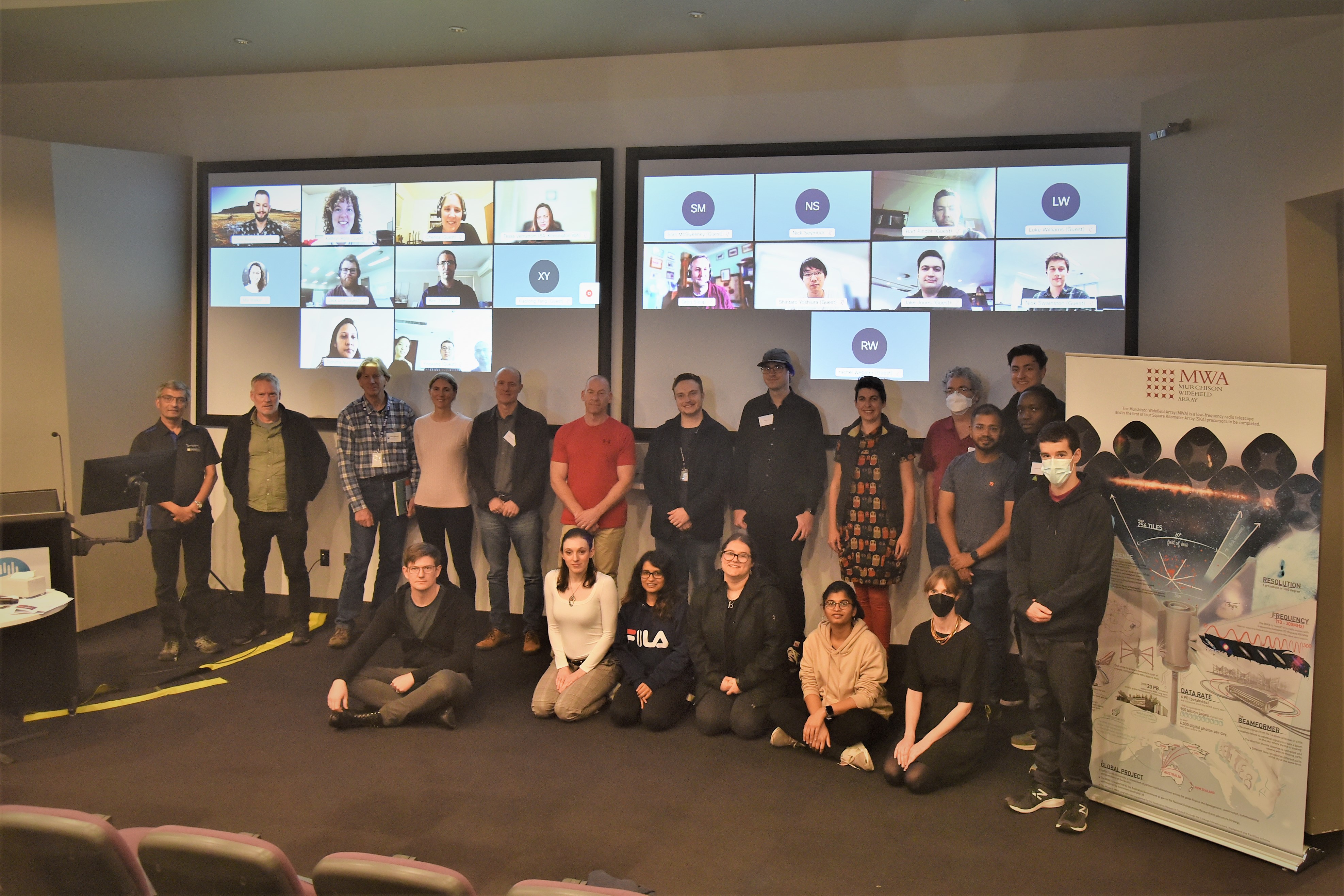
2022 July Hybrid Project Meeting
- Mia Walker
The project meeting website is here: https://indico.mwatelescope.org/event/8/
This page will contain internal information.
Recorded Talks
Available on the MWA YouTube Channel:
Presentation Slides
To upload your slides:
- Make sure you are logged in
- Click "Edit" at the top of the page
- Highlight your talk title and click the link button in the toolbar
- The popup dialog should allow you to upload a file, or link to a URL.
Name | Title and PDF |
|---|---|
| EDWARDS, Phil | Welcome by MWA Board Chair |
| TINGAY, Steven | MWA Director's Update |
| RISELEY, Christopher | Principal Scientist's Update |
| BARRY, Nichole | EoR Analysis Bonanza |
| STAR, Pyxie | Uncovering the detailed antenna bandpass using MWAX |
| KRIELE, Mike | (Multi-system) Spherical Harmonic Transit Interferometry |
| BELL, Scott | MWA Signal Path Animation |
| ITO, Takumi | Foreground Removal with Gaussian Process Regression |
| BHAT, Ramesh | Science update: Pulsars and Fast Transients |
| ZHANG, Zhongli | The discovery of new VCS pulsars in dense stellar environments |
| SWAINSTON, Nicholas | pulsar_spectra: an open source flux density catalogue and pulsar spectra fitting software |
| MCSWEENEY, Sam | SMART discovery of an unusual nulling, sub-pulse drifting pulsar |
| LEE, Christopher | Spectral evolution of pulsar radio emission using SKA-Low precursor stations |
| KAUR, Dilpreet - Science Highlight Talk | Detection of frequency-dependent dispersion measures toward PSR J2241-5236 from contemporaneous wide-band observations |
| MORALES, Miguel | Precision Map of Diffuse Galactic Emission Across the Southern Galactic Cap |
| ROSS, Kathryn (Kat) | Using low frequency variability to find frustrated AGN |
| WAYTH, Randall | Principal Engineer's Update |
| NULL, Dev | The Dragons of Direction Dependent Calibration |
| BARLOW, Harrison | MWA-ASVO Update |
| SLEAP, Greg | Data Archive and Retention (Policy V2) |
| SLEAP, Greg | ‘Adapting to a post-limitless archive’ Discussion Block |
| TINGAY, Steven | Wrap-up |
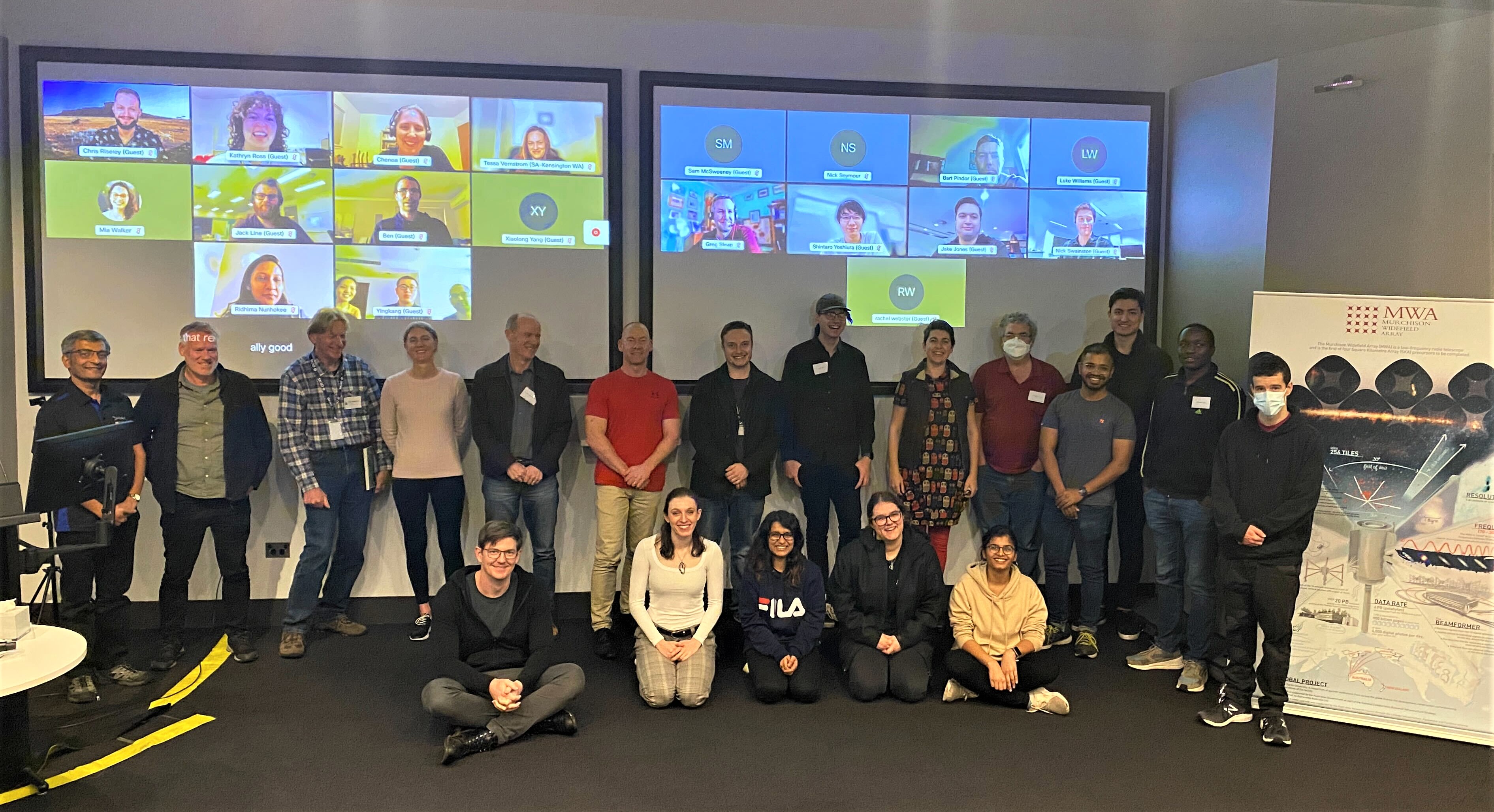
There were 85 registered participants for the meeting.
Prize Winners
Judged by Principal Scientist Chris Riseley.
Best talk: Kat Ross. Kat's work on spectral variability really showcases one of the key strengths of the MWA, namely the massive fractional bandwidth over such a large FoV, and the continued evolution of this project over the course of her PhD has been really great to witness. The synergy of MWA, ATCA and LBA follow-up is allowing her to finally answer such a long-standing question about the nature of these peaked-spectrum sources, and it's great to see this work presented in such a clear and engaging manner by a speaker who is very clearly enthused about the work and has a deep level of understanding.
Honourable mention: Nick Swainston and Mike Kriele both deserve mentions for their talks. Both the pulsar_spectra module that Nick presented and the all-sky diffuse mapping using EDA + LOFAR-LBA presented by Mike are really neat things in and of themselves, as well as providing a valuable resource to the community -- particularly given the ramping up of SMART, and the recent advancements made by the EoR group. Nichole's talk really emphasised the need for as good a model of the Galaxy as we can get, and Mike's talk bodes well in that regard.
Photos
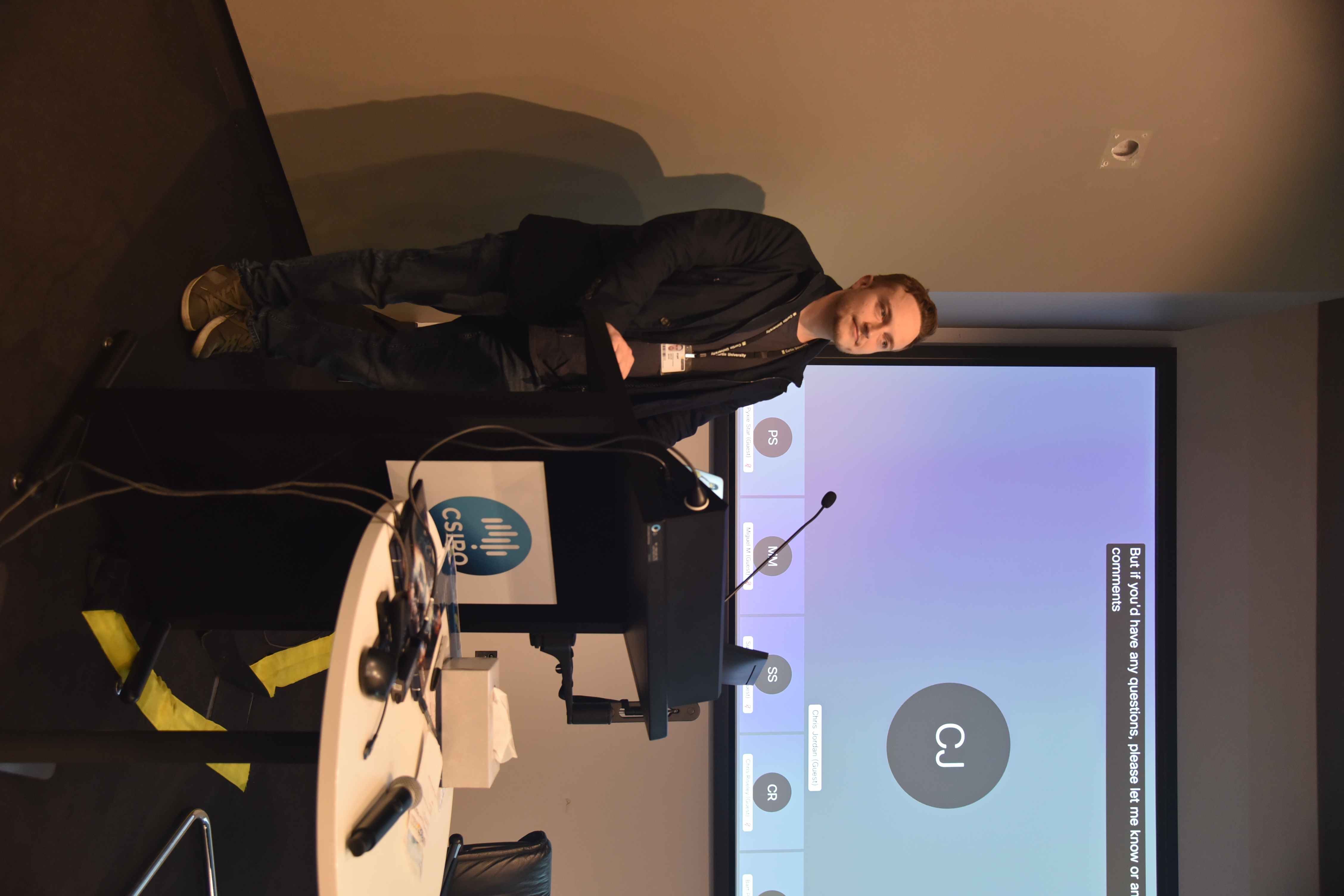
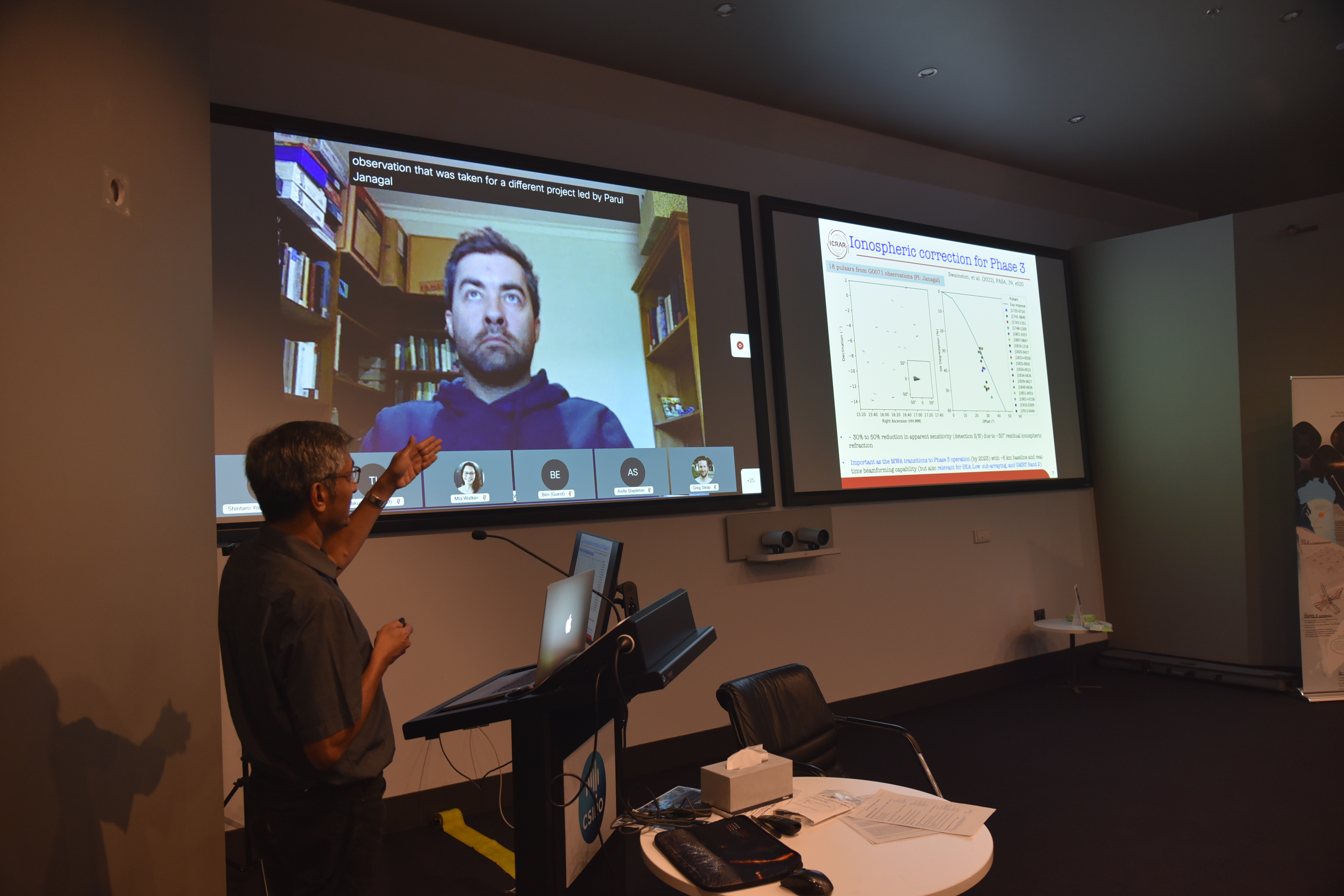
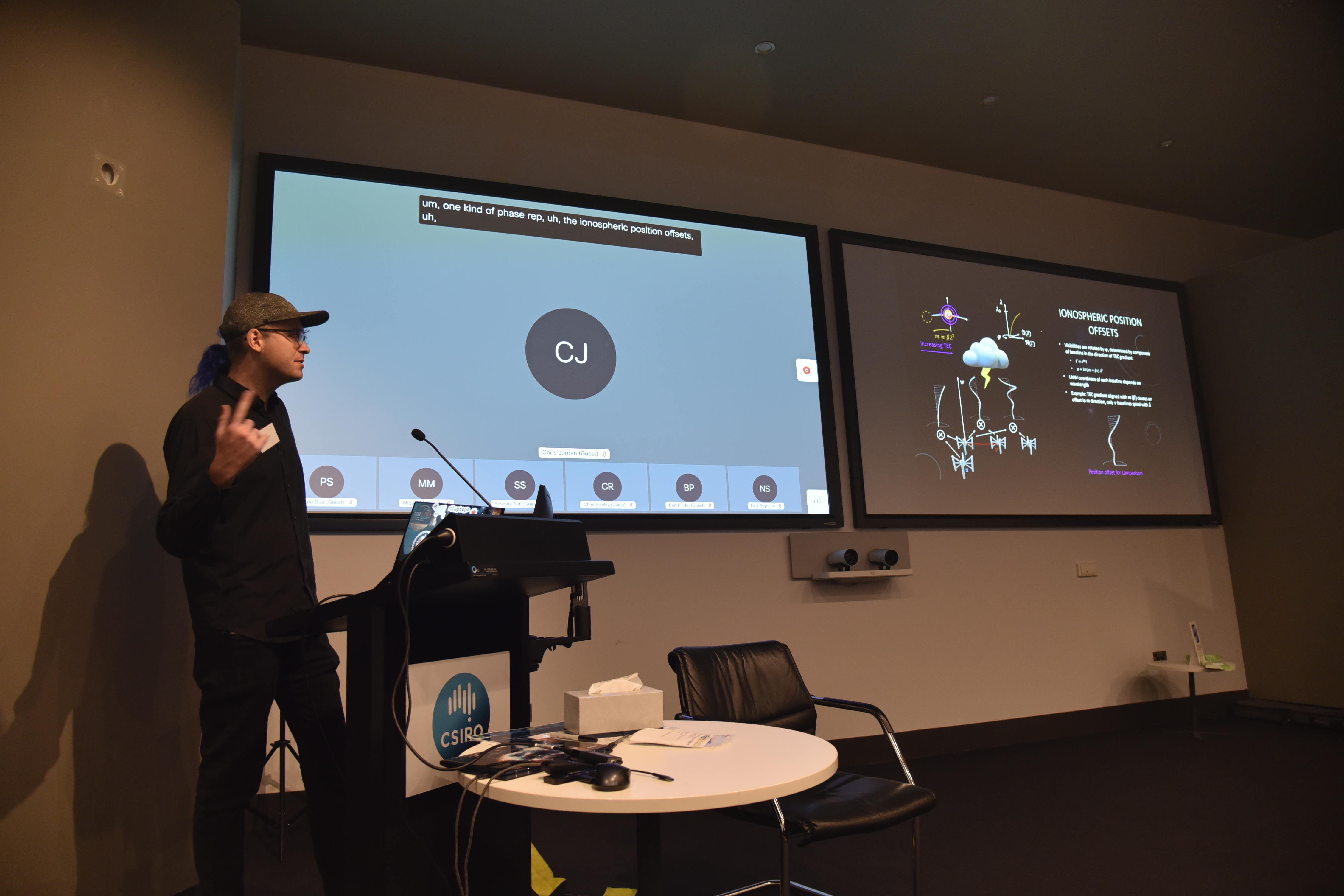
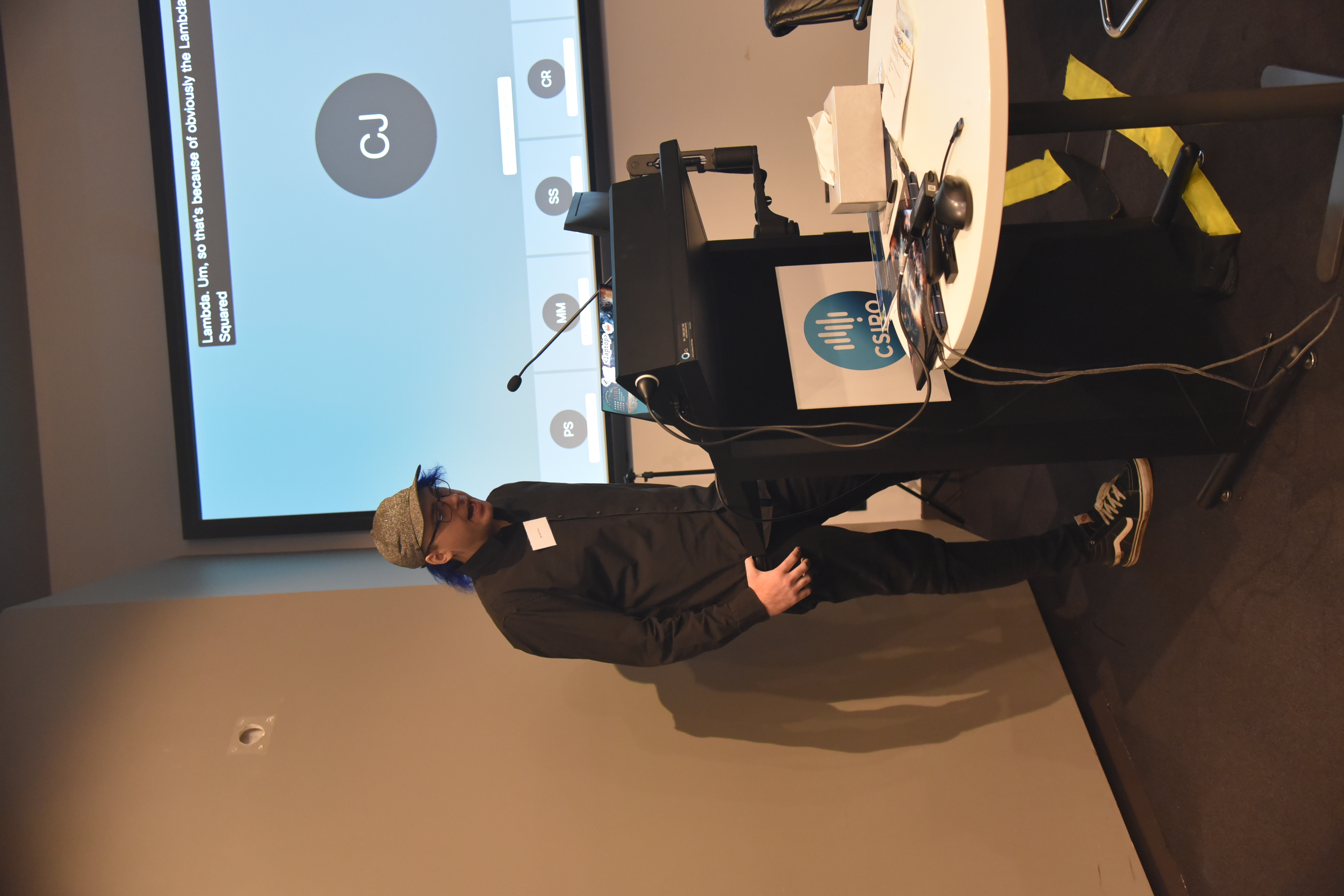
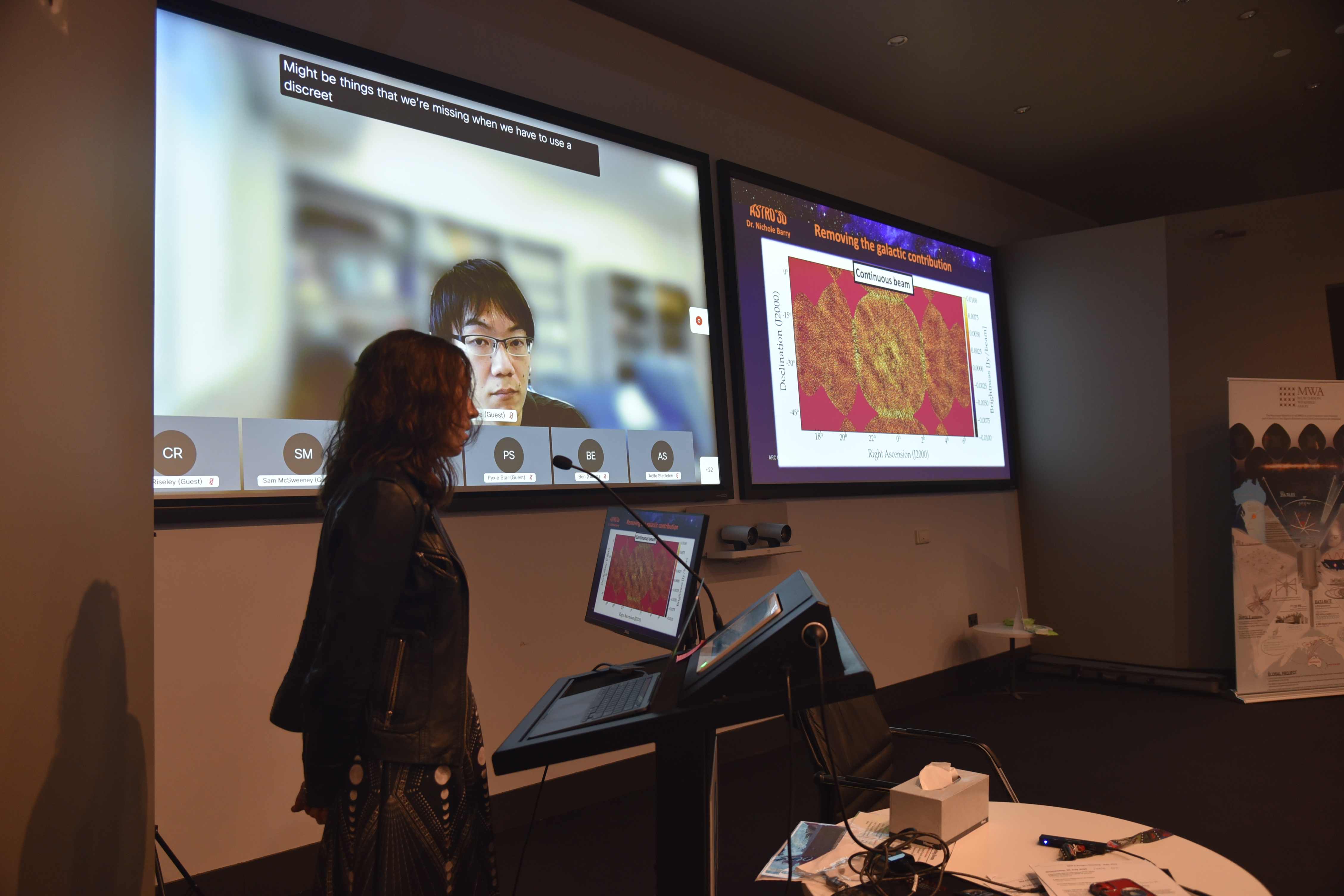
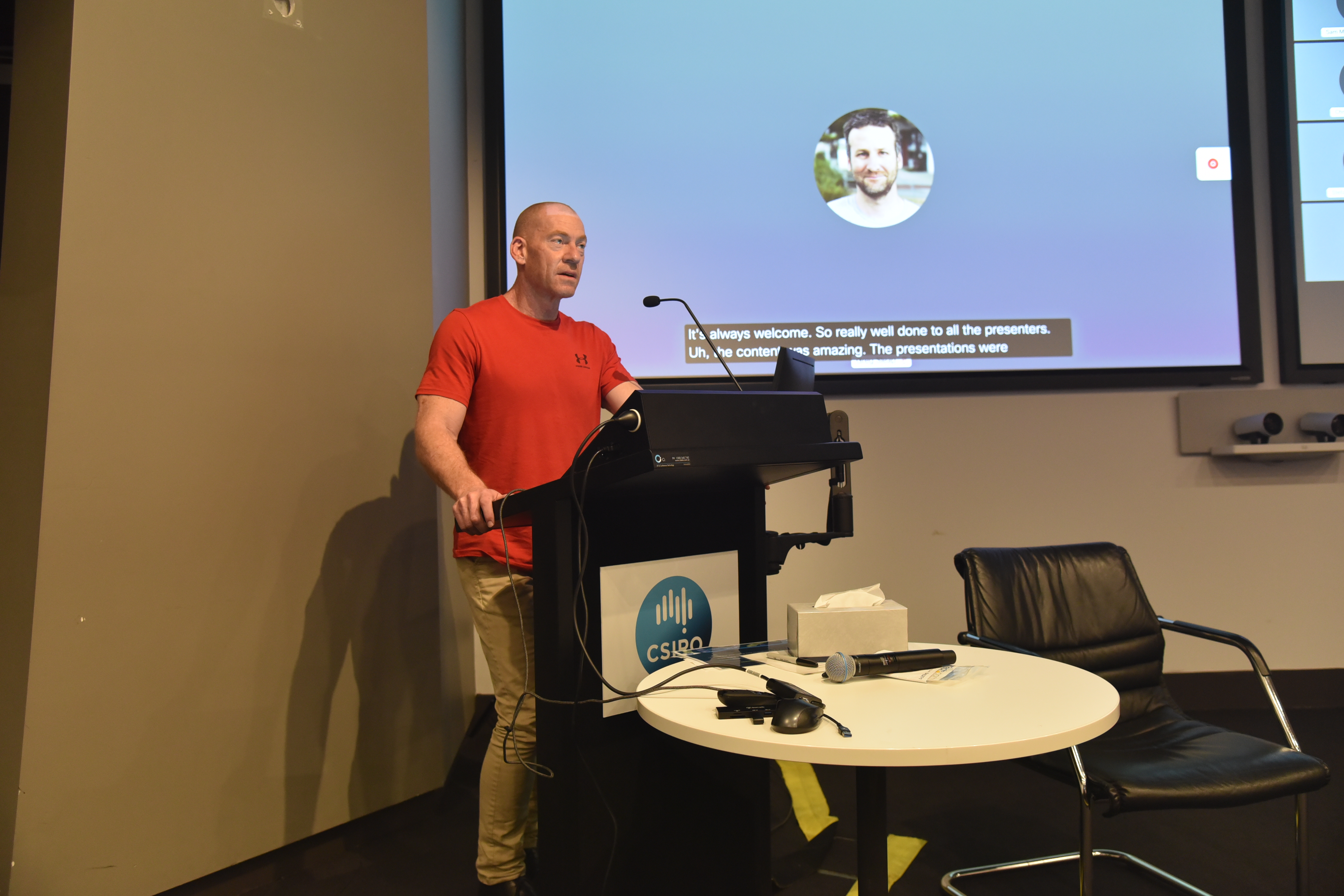
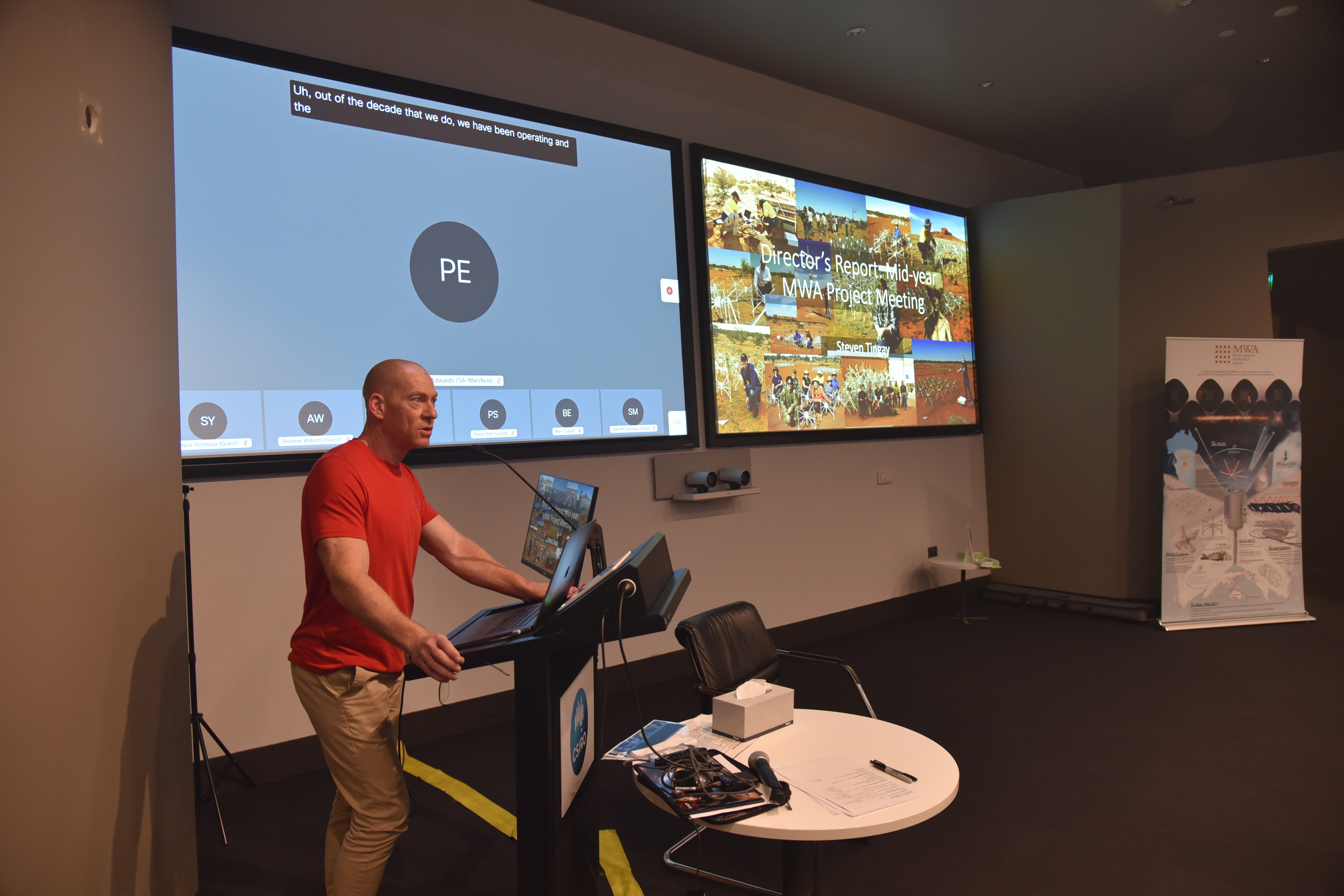
Please share your photos from the meeting here.
.jpg?version=1&modificationDate=1658471636438&cacheVersion=1&api=v2&width=333&height=250)